

The Root of the New Age No One Talks About: Theosophy
The Age of Spiritual Hunger
In the late 1800s, Western society was undergoing massive change. Scientific advancement and industrial progress were explaining phenomena that had traditionally been attributed to God. At the same time, institutional religion was increasingly dismissed as rigid or dogmatic. What was often rejected was not merely religious structure, but God’s authority and moral law.
Many people were hungry for direct spiritual experience, mystery, and what they believed to be “hidden wisdom.” They wanted spiritual authority without submission, transcendence without repentance, and enlightenment without God. Helena Petrovna Blavatsky offered a system that promised all of that.
Who Was Helena Blavatsky
Helena Blavatsky was a Russian noblewoman widely read in mysticism, Eastern religions, and Western occult traditions. Although raised within the Christian tradition, she rejected Christianity as incomplete and overly rigid.
Blavatsky traveled extensively throughout Europe, the Middle East, India, Tibet, and other parts of the world, claiming to gather spiritual knowledge and esoteric teachings from various sources. These journeys were later used to support her authority as a transmitter of hidden wisdom.
She became best known for publishing Isis Unveiled and The Secret Doctrine, and for co-founding the Theosophical Society in 1875. In Isis Unveiled she stated her work was “in particular directed against theological Christianity, the chief opponent of free thought”.
Her life included two notable periods of unusual experiences: as a young girl she reportedly suffered from sleepwalking and vivid hallucinations, and later in life she claimed clairvoyant contact with spiritual Masters called The Mahatmas. She presented all of these experiences as evidence of her psychic and spiritual insight.
Her authority rested on claimed supernatural experiences and secret knowledge.
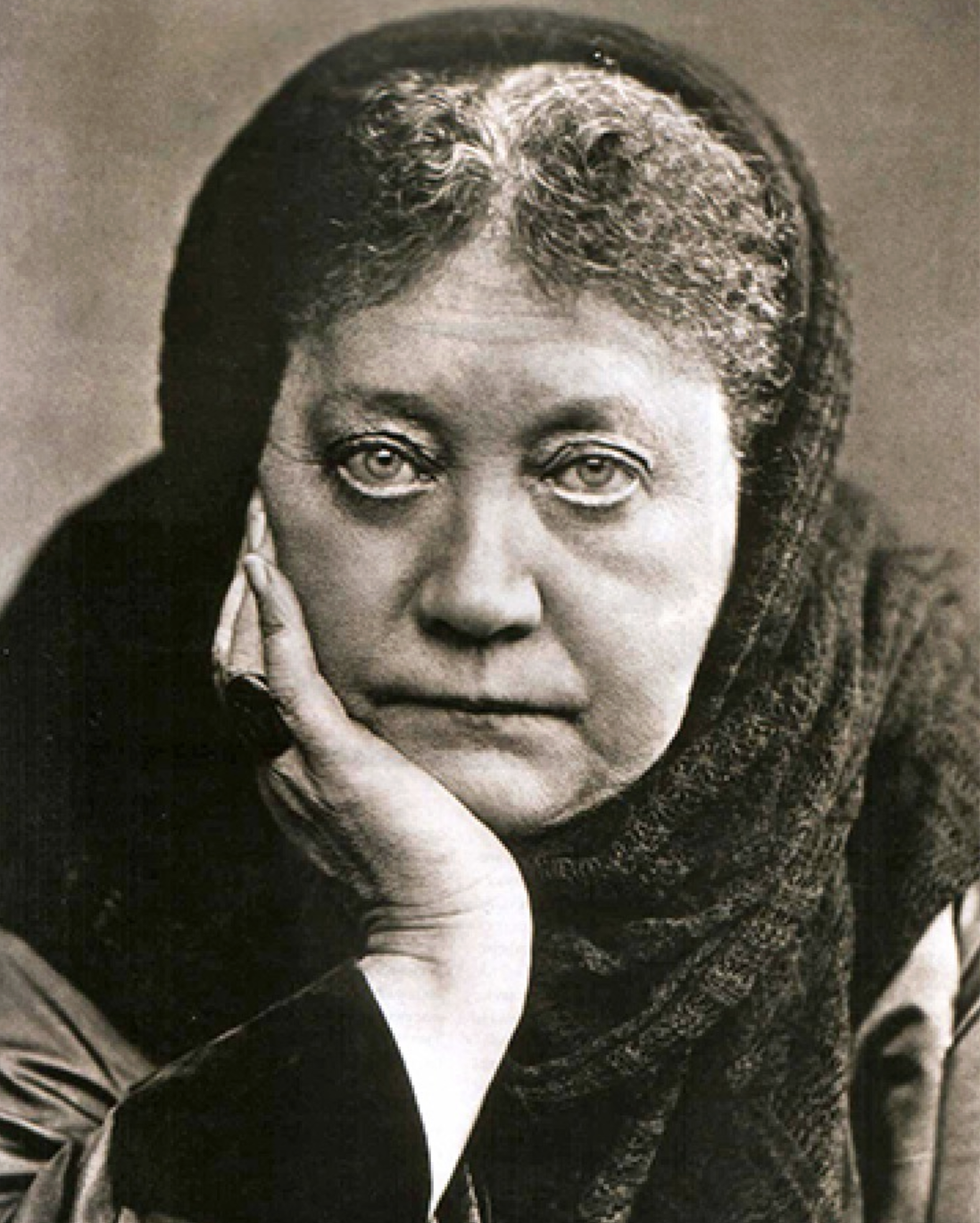
Helena Blavatsky
The Mahatmas or “Ascended Masters”
Central to Blavatsky’s authority was her claim that she was taught by advanced spiritual adepts known as Mahatmas or “Masters of Wisdom.” These beings were said to guide humanity from behind the scenes and to possess superior spiritual insight.
Names commonly repeated in Theosophical writings include Master Morya, Koot Hoomi, Sanat Kumara, and later Djwal Khul. These figures were presented as enlightened overseers of human spiritual evolution.
How Blavatsky Claimed to Receive Her Teachings
Blavatsky asserted that her teachings were transmitted through clairvoyant contact, trance states, astral communication, psychic mentorship, and visions. She published letters she attributed to the Masters, now known as the Mahatma Letters.
To followers, this made her writings appear revelatory rather than imaginative. The teachings felt secret, elite, and spiritually authoritative.
Did the Mahatmas Really Exist
Blavatsky claimed her teachings came from hidden Masters who transmitted knowledge through occult means. Historically, there is no independent evidence these beings existed.
Scholars examining the Mahatma Letters concluded many were written or dictated by Blavatsky herself. Her system synthesized Gnosticism, Western occultism, reinterpreted Eastern ideas, nineteenth century pseudoscience, and esoteric symbolism.
She did not receive a revelation. She constructed a system.
The Core Teachings of Theosophy
At its heart, Theosophy teaches that all religions are expressions of one hidden divine wisdom. Humanity, according to this system, is progressing through stages of spiritual evolution toward godlike states.
Biblical concepts such as sin, repentance, and salvation through Christ’s unique atonement were replaced with karma, reincarnation, esoteric laws, and self-development.
In practical terms, someone is embracing Theosophy often without realizing it when they agree with ideas such as:
• All religions lead to the same destination, with Christianity treated as an exception or limitation
• Humanity is spiritually evolving toward higher consciousness
• Truth is accessed through inner awakening, meditation, occult study, and personal experience
• God is understood as an impersonal force present in everything, especially within the self
Theosophy glorifies self-mastery, hidden knowledge, vibration, unity consciousness, and inner divinity.
A new view of good and evil
Helena Blavatsky founded the theosophical magazine Lucifer in 1887, deliberately using the name to provoke and challenge the traditional Christian understanding.
In the first issue she explained that the title was chosen because Lucifer literally means “light‑bearer” or the morning star and that her goal was to “bring to light the hidden things of darkness” and fight prejudice and superstition against what she saw as true or hidden spiritual knowledge. She argued that the Christian association of the word with the devil was a mistake and that Lucifer should be understood as a symbol of light and enlightenment rather than evil.
Essentially, she was presenting evil as good and good as evil, turning Scripture and the historic understanding of salvation upside down. This became a central motif in theosophy, influencing modern spiritual movements that blur the line between truth and deception.
Scripture warns of exactly this:
“Woe to those who call evil good and good evil, who put darkness for light and light for darkness” Isaiah 5:20.
From Mystic Text to Global Movement
After Blavatsky’s writings gained influence, figures such as Annie Besant and C. W. Leadbeater joined the Theosophical Society. Following Blavatsky’s death in 1891, they became her successors.
They expanded and systematized her teachings, building schools, lodges, journals, and international networks. What began as mystical writings became a structured global movement.
Besant in particular transformed Theosophy into an administrative and educational machine, exporting it into politics, education, and Indian nationalism.
The World Teacher Project and Krishnamurti
Leadbeater and Besant identified a young Indian boy, Jiddu Krishnamurti, as a coming “World Teacher.” They formed the Order of the Star to promote him as a vehicle for the Masters.
Krishnamurti was publicly groomed for this role, then later rejected both the title and the organization entirely. His rejection exposed how Theosophy manufactured spiritual authorities to legitimize its claims.
Alice Bailey and the Birth of the New Age
Alice Bailey, a student of Annie Besant, produced a huge body of esoteric writings which she claimed were telepathically dictated by the Tibetan Master Djwal Khul.
Alice Bailey’s work is one of the clearest links between classical Theosophy and what we now call New Age spirituality. She took many of the ideas from Theosophy and organized them into a system that was easier for regular people to understand and follow. Many of the terms we hear today in New Age circles, like planetary consciousness, lightworkers, vibration, energy fields, and Christ consciousness, were first used or popularized by Bailey, shaping the way millions of people approach spirituality today.
Reframing Christ
Theosophists redefined Christ not as the unique incarnate Son of God, but as a cosmic principle or universal world teacher. Salvation was no longer rooted in the person and work of Jesus, but in accessing a “Christ principle.”
This redefinition later evolved into modern language such as “Christ consciousness,” which detaches Christ from the Gospel entirely.
The I AM Movement and Ascended Master Teachings
In the 1930s, Guy and Edna Ballard launched the “I AM” Activity in the United States. This movement popularized the idea that Ascended Masters were living teachers who could be contacted or embodied through ritual and belief.
This marked a commercialization and Americanization of Theosophical mythology.
Eastern Teachers and Western Syncretism
Figures such as Paramahansa Yogananda introduced Eastern meditation and yoga practices to Western audiences. By this time, Theosophy had already primed Western seekers to accept reincarnation, chakras, and spiritual energy as universal truths.
Eastern practices were often reframed as non-religious universal laws, detached from their original cultural and theological contexts.
The Divine Feminine and Goddess Spirituality
Blavatsky drew heavily from Hindu and Tantric concepts of Shakti and spoke of “the Mother of the World” and “Devi Prakriti” as creative forces behind manifestation.
These ideas re-elevated the feminine as divine creative power, departing sharply from biblical monotheism. Over time, this language evolved into modern Goddess spirituality, Gaia worship, and Divine Feminine movements.
Rudolf Steiner and Anthroposophy
Rudolf Steiner began as a leader within the German branch of the Theosophical Society. In 1913, he broke away over doctrinal disputes and founded Anthroposophy.
Anthroposophy carried Theosophical ideas into education, agriculture, and medicine, influencing systems still in use today.
Truly, it kept many of the same ideas from Theosophy but presented them in a new system.
• It teaches that humans grow spiritually in stages, guided by higher spiritual beings.
• It believes in past lives and karma, just like Theosophy did.
• It borrows from Eastern religions and Western occult ideas, including a mystical reinterpretation of Christ.
• It talks about energy bodies, subtle spiritual forces, and higher planes.
• It applies these ideas to real-life things like schools, farming, and health practices, but the spiritual theory behind it comes from Theosophy.
Theosophy and Wellness Culture
Theosophists promoted vegetarianism, natural remedies, and spiritual hygiene as tools for self-evolution. Alice Bailey in particular taught that diet, health, and daily habits directly influenced spiritual progress.
Spiritual hygiene included dietary discipline, physical health, mental control, energetic practices, and structured daily routines. The goal was to raise vibration and become more sensitive to spiritual forces.
Much of modern holistic wellness culture, plant-based spirituality, and “mind body spirit” frameworks trace directly back to this system.
Atlantis and Lemuria
Blavatsky significantly reshaped both Atlantis and Lemuria into spiritual myths.
Atlantis originated with Plato as a moral and political allegory. Blavatsky reshaped it as a real prehistoric civilization populated by spiritually advanced psychic beings, inserting it into her Root Race theory.
Lemuria began as a discarded scientific hypothesis. Blavatsky transformed it into a mystical lost continent housing earlier Root Races. Neither version has historical or scientific evidence.
Why Christianity Was Rejected
Theosophy could not accept Christianity’s exclusive claim that Christ alone saves. Its pantheistic framework required multiple masters, reincarnations, and spiritual hierarchies.
To make room for this system, Christ was reduced to a symbol rather than upheld as Savior.
Modern Movements That Derive from Theosophy
New Age spirituality, Western yoga and chakra systems, spiritual astrology, energy healing, channeling, manifestation teachings, spiritualized wellness, Goddess spirituality, Wicca, esoteric Christianity, Western nondualism, and eco-spirituality all trace directly back to Theosophical foundations.
This is not random spirituality. It is a lineage.
The Christian Response
Christianity stands in direct contrast to Theosophy.
God speaks openly, not through hidden masters. Truth is revealed publicly in Christ, not reserved for initiates. Salvation is not achieved through spiritual evolution, but received by grace.
Jesus is not a principle to awaken, but a Person who redeems. He chose fishermen, not astral adepts. That alone should tell us something.
An Invitation
If you have been chasing light outside of Christ, you can turn to Him.
He is not hidden. He is not exclusive to elites. He is there.
“Lord Jesus, I surrender my search to You. Be my truth, my wisdom, my life.”