

The Roots of the New Age You Didn’t Know part 2: Gnosticism
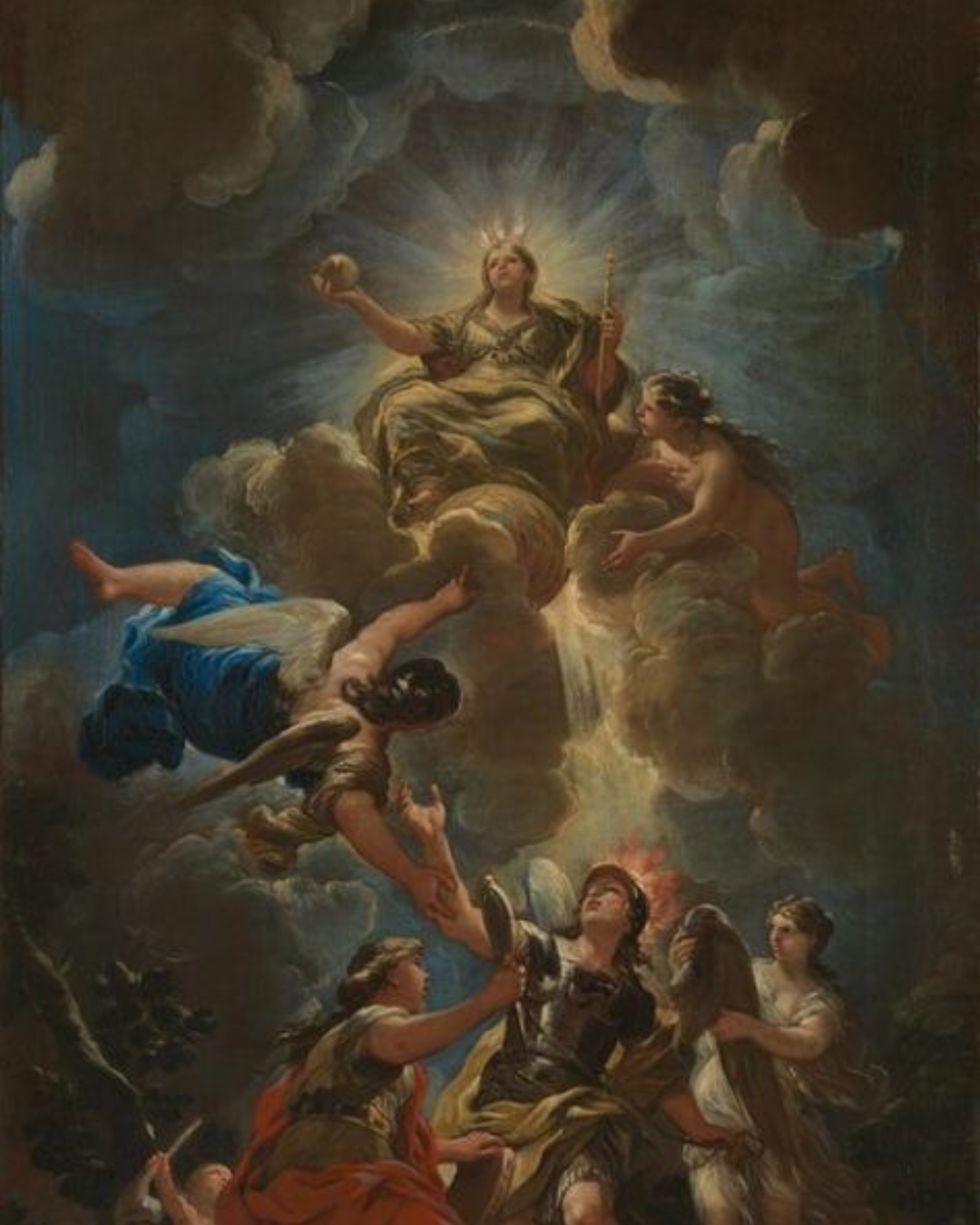
Allegory of Divine Wisdom by Luca Giordano
What is Gnosticism
Gnosticism was an early religious movement that appeared in the first centuries after Christ.
It taught that salvation comes through secret knowledge and inner self work, rather than through repentance, faith, or the grace of God.
The word comes from the Greek gnōsis, meaning knowledge.
At first glance, that may sound harmless. Knowledge itself is not the problem. The issue is how Gnosticism redefined what knowledge meant and what it was believed to do.
Gnosticism redefined gnosis
Gnosticism took the normal word gnosis and loaded it with a very specific and radical meaning.
In Gnostic belief, gnosis is
• secret knowledge
• revealed only to an enlightened few
• about divine origins, spiritual identity, and escape from the material world
• the means of salvation itself
This is where the idea of hidden knowledge comes from. Not knowledge available to everyone, but something concealed, elite, and accessible only through special insight or awakening.
Why Gnosticism existed
Gnosticism arose as people tried to make sense of suffering, evil, and the hardships of life.
Rather than seeing creation as good but fallen, Gnostic systems explained pain by claiming the world itself is wrong.
To support this, they developed alternative creation stories, spiritual hierarchies, and myths that explained why the material world feels broken.
Because the world was viewed as inherently bad or a mistake, salvation was not about redemption or restoration. It was about escape.
Roots of Gnosticism
Gnosticism was not a single unified religion, but a collection of movements that arose roughly between the first and fourth centuries AD.
It blended elements from several sources
• Jewish and Christian ideas, often reinterpreted
• Egyptian and Persian dualism, which divided reality into light and darkness
• Hellenistic philosophy, especially Platonism, which often viewed the material world as inferior
• The idea of secret or hidden knowledge believed to lead to spiritual ascent or salvation
Across many Gnostic systems, matter was viewed as inferior, corrupt, or something to be escaped rather than redeemed.
Hidden truth
In many ways, Gnosticism is the ancient world’s version of the New Age.
That is why many people in modern New Age spirituality feel instinctively drawn to it. It feels familiar.
For those who presuppose that truth is hidden, that reality is not what it seems, and that enlightenment comes through special insight, this path feels revelatory.
Even though it is untrue, it feels like finally seeing behind the curtain.
Gnostic gospels
Gnostic groups produced their own writings, often called gospels, in order to give authority to their beliefs.
More specifically, they wrote these texts to
• Present them as secret teachings from Jesus or His followers
• Compete with the already circulating apostolic Gospels
• Claim access to teachings supposedly given only to a select few
• Legitimize their cosmologies and spiritual practices
• Attract followers through the promise of hidden or advanced revelation
These writings were not hidden away because the church was afraid of them. They were examined, compared, and rejected because they did not align with what had already been received.
Different groups, different views
There was no single Gnostic belief system. Different groups taught different ideas, even while sharing the same underlying assumptions.
Sethians
Associated with texts like the Gospel of Judas.
They taught that the world was created by a lesser god and that salvation comes through secret knowledge.
Valentinians
Associated with texts like the Gospel of Mary.
They emphasized the soul’s ascent through inner knowledge and often portrayed Mary Magdalene as a special revealer of hidden truth.
Basilideans
Held to complex spiritual hierarchies and taught that knowledge itself saves.
Other groups
Blended philosophy, mythology, and secret teachings, sometimes focusing on strict morality and other times on mystical experience.
Each Gnostic group produced texts that reflected its own ideas about God, creation, and salvation.
Why Gnostic texts are not reliable
Gnostic writings were composed decades to centuries after the apostles had died.
Their teachings conflict with what Jesus is recorded as teaching in the earliest Christian writings, which were widely circulated, publicly read, and consistently accepted by the early church.
They do not represent suppressed originals, but later reinterpretations.
How scholars date ancient manuscripts
Historians and textual scholars date ancient writings using multiple methods
• Language and vocabulary tied to known time periods
• Writing style and literary genre common to certain centuries
• Theological ideas that developed at identifiable points in history
• References to historical events, debates, or movements
• Dependence on earlier known texts
• The physical age and transmission history of surviving manuscripts
These methods are standard across all ancient history, not just biblical studies.
What the Gnostic gospels fail
When examined closely, Gnostic texts consistently reveal later origins
• They reflect theological ideas that appeared after the time of the apostles
• They rely on and reinterpret already written New Testament texts
• Their language and concepts fit second to fourth century thought
• Their settings do not match first century Judea
• Their names, geography, and concerns reflect later communities
This is why they were not received as apostolic or authoritative.
What they believe
While details vary, Gnostic systems share core beliefs.
Gnosticism teaches that the material world is not good.
It is a lower or false reality.
The body is a prison.
The world is a trap.
Matter is something to transcend, not redeem.
Hidden rulers and control
Many Gnostics believed the world is ruled by unseen powers called archons.
These beings were thought to control reality from behind the scenes.
They were often described as ignorant, deceptive, or oppressive.
Humanity, in this view, lives under their influence without realizing it.
The false creator
In many Gnostic systems, the creator of the physical world is not the true God.
He is portrayed as a lesser being, often called the Demiurge.
The “true God” is believed to be distant and unknowable.
Creation is not an act of love, but a mistake or deception.
The Gnostic human problem
Humans are believed to contain a divine spark.
This spark is trapped inside the body and inside this false world.
In Gnosticism, sin is not the problem.
Ignorance is.
You are not fallen.
You are asleep.
Salvation according to Gnosticism
Salvation comes through awakening.
Through realizing who you really are.
Through receiving special knowledge.
Once awakened, you are said to escape the system.
Sounding familiar
Many modern spiritual ideas flow directly from Gnostic thought
• Truth is discovered inwardly rather than received
• Not everyone can see the truth, only the awakened can
• Reality is a prison or simulation
• You must wake up and escape the system
• You are divine but trapped in a body
These ideas did not begin on social media. They are very old.
What Christianity teaches
Christianity teaches something fundamentally different.
The world is fallen, not a matrix.
The body is broken, not evil.
Sin is real, not ignorance.
God entered creation to redeem it.
Jesus came to save sinners, not awaken little gods.
If you believe the world is a trap, that hidden forces control reality, and that salvation comes through awakening, that belief already has a name.
It is called Gnosticism.
Christianity offers a different hope.
You are not saved by seeing more.
You are saved by being found.
Pray to Jesus and let Him open your eyes to the truth.